The immune response of live-attenuated vaccines may last for decades; however, other types of antigens like inactivated and recombinant protein require booster immunizations. Saponin adjuvants like QSap™ elicit predominantly Th1 immune responses, characterized by robust cell-mediated immunity while maintaining high level of antibody response. This immunological environment promotes immune memory.
Two commercial FMD vaccines for use in 10-12 weeks old pigs were improved by saponin adjuvant and neutralizing titers following 84 days post vaccination and 56 days post-infection remained high [1].
Two vaccines adjuvanted with saponins against Toxoplasma gondii generated a strong antibody and T cell response that was observed until the day 96 after the primary vaccination in swine [2].
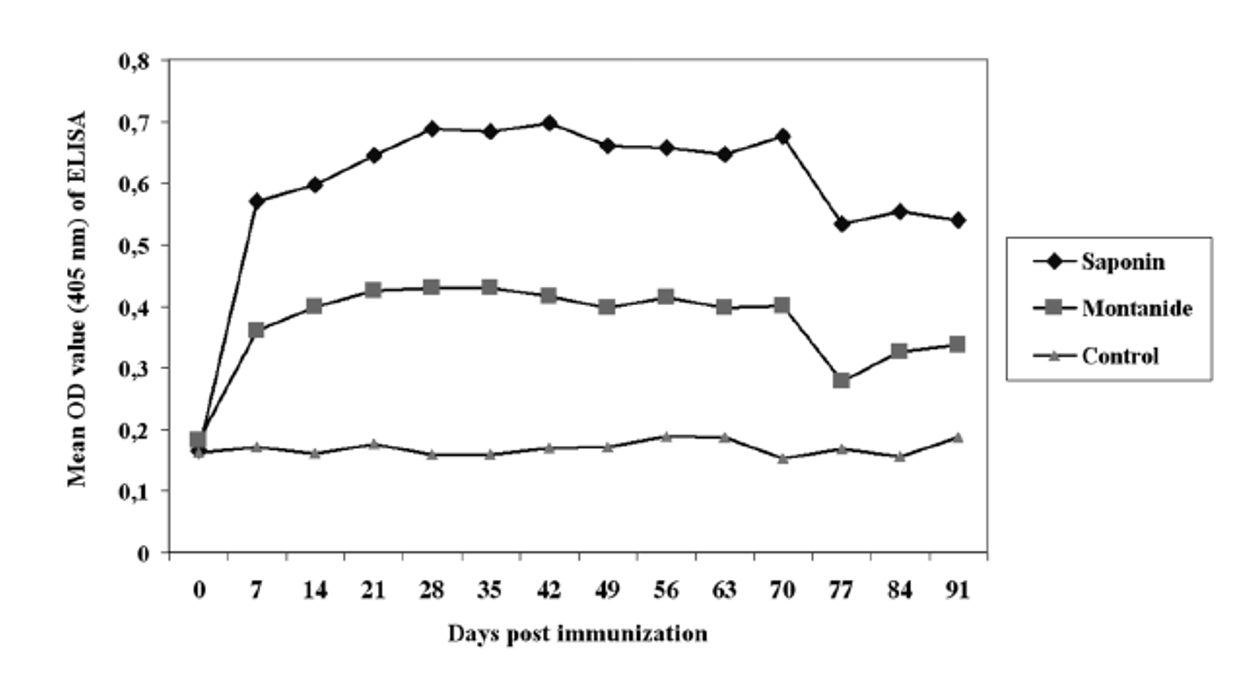
Long-term immune response has been observed in vaccines adjuvanted with saponins on calves [3] where a stronger antibody production has been observed compared to Montanide ISA 50, and sheep [4].
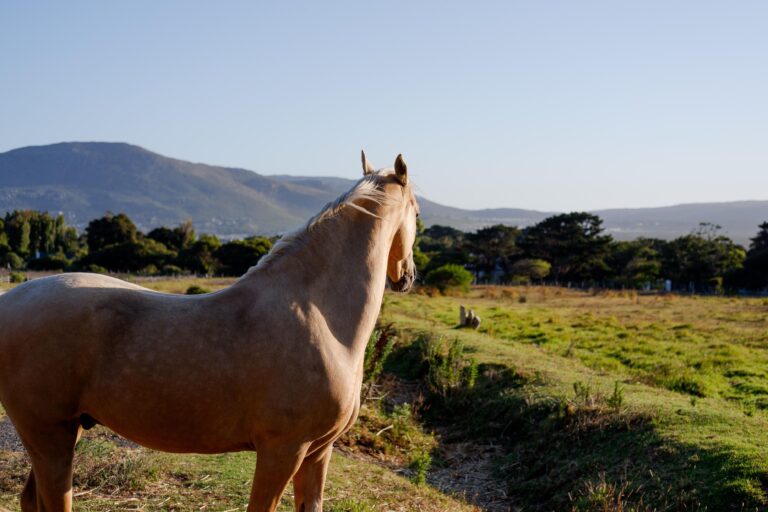
A long-term study in horses on tetanus immunization suggests the antibody titers provide protection over 3 years [5].
References
1.Lee, M. J. et al., 2020. Advanced Foot-And-Mouth Disease Vaccine Platform for Stimulation of Simultaneous Cellular and Humoral Immune Responses. Vaccines, 8(2), p. 254.
2.Rahman, M. et al., 2019. QuilA-Adjuvanted T. gondii Lysate Antigens Trigger Robust Antibody and IFNγ+ T Cell Responses in Pigs Leading to Reduction in Parasite DNA in Tissues Upon Challenge Infection. Front. Immunol., Volume 10.
3.Ponnudurai, G., John, L. & Jayagopal Harikrishnan, T., 2007. Influence of adjuvants Saponin and Montanide ISA 50 on immune response of calves immunized with purified midgut antigen of Hyalomma marginatum isaaci. Veterinarski arhiV, 77(1), pp. 9-17.
4.Çokçalişkan, C. et al., 2022. Evaluation of Quil-A, E. coli DNA and Montanide™ ISA 206 adjuvant combination on the antibody response to foot-and-mouth disease vaccine in sheep. Acta virologica, Volume 66, p. 197 – 205.
5.Kendall, A. et al., 2015. Duration of tetanus immunoglobulin G titres following basic immunisation of horses. Equine Veterinary Journal, 48(6), pp. 710-713.