Saponin adjuvants have shown efficacy in murine model.
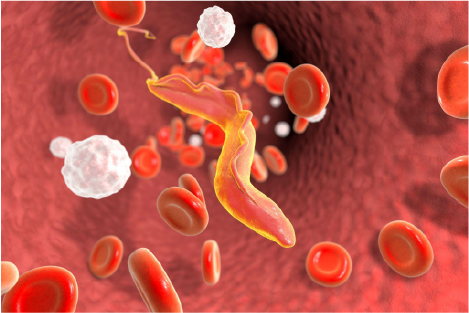
Trypanosomiasis, including Chagas disease, commonly known as sleeping sickness in humans and nagana in animals, poses significant health and economic burdens in sub-Saharan Africa.
Several studies demonstrated that vaccines prototypes formulated with different Trypanosoma antigens plus saponin adjuvants elicited immune protection against the infectious disease by induction of antibodies able to bind complement to the parasite in animal models of vaccination and infection [1-3]. Bontempi et al (2015) showed that mice immunized with the mutant TS antigen and saponin adjuvant presented ∼50 times less parasite count of Trypanosoma cruzi than non-immunized mice [2].
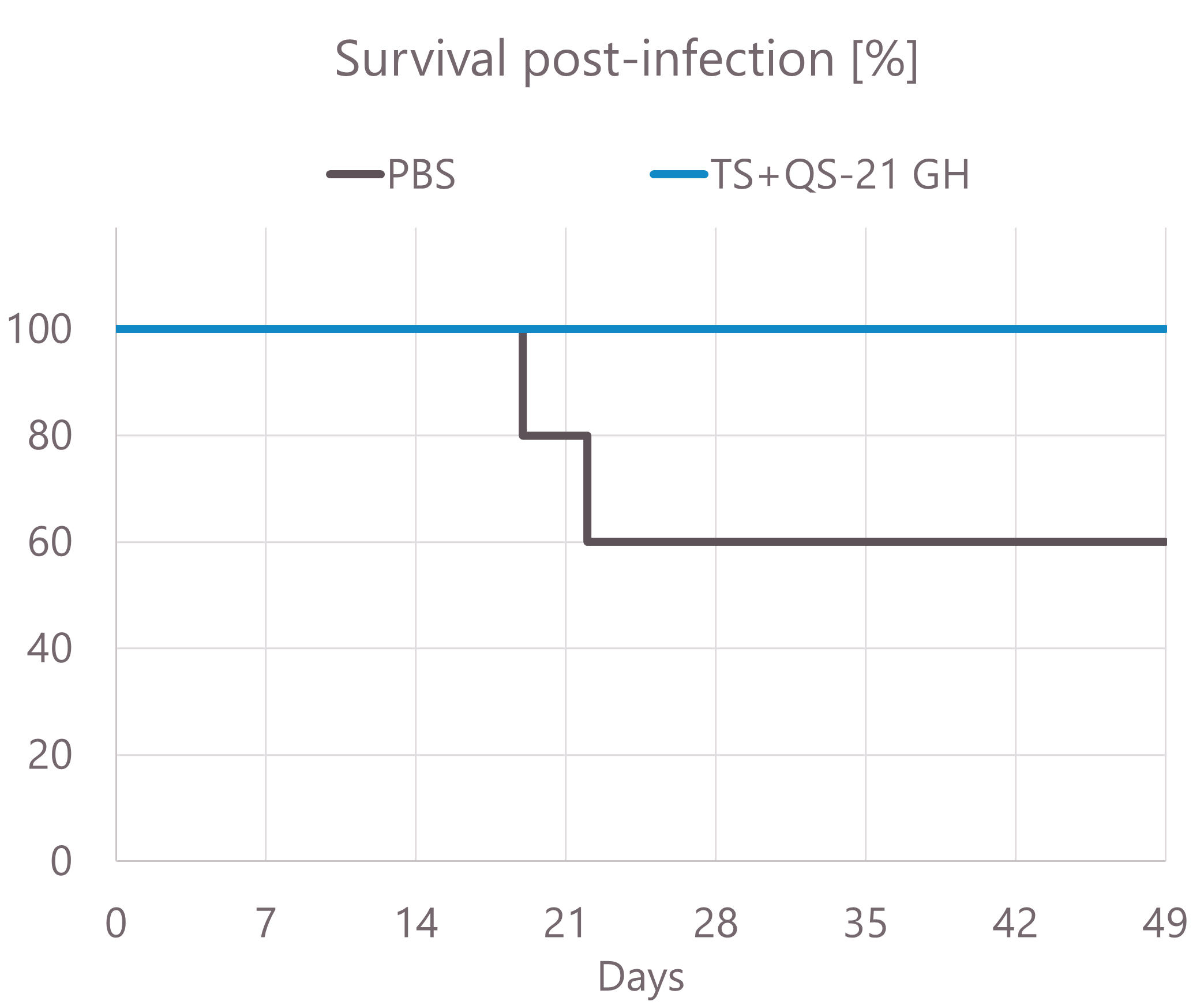
A non-published research led by Dr. Iván Marcipar at the Universidad Nacional del Litoral has demonstrated that a trans-sialidase–based vaccine, adjuvanted with a QS-21 GH formulation, achieved 100% survival in a murine challenge model [4], highlighting the critical role of adjuvant-driven cellular immunity.
The integration of saponin adjuvants in trypanosomiasis vaccine formulations represents a relevant opportunity to improve vaccine efficacy and combat this devastating disease.
References
1. Autheman, D. et al., 2021. An invariant Trypanosoma vivax vaccine antigen induces protective immunity. Nature, Volume 595, pp. 96-100.
2. Bontempi, I. A. et al., 2015. Efficacy of a trans-sialidase-ISCOMATRIX subunit vaccine candidate to protect against experimental Chagas disease. Vaccine, 33(10), pp. 1274-1283.
3. Bontempi, I. et al., 2017. Trans-sialidase overcomes many antigens to be used as a vaccine candidate against Trypanosoma cruzi. Immunotherapy, 9(7), pp. 555-565.
4. Marcipar, I. et al., 2026, Evaluation of QS-21 adjuvant in a vaccine formulation against Trypanosoma cruzi.